Case study · Healthcare · Independent
Dialysis Facility Website
Plus Global Dialysis Home Intl.
Ownership: Solo · AI-native
My role: Sole engineer, AI-native, using my six-agent pipeline.
- Sector
- Healthcare & life sciences
- Context
- Independent
- Ownership
- Solo · AI-native
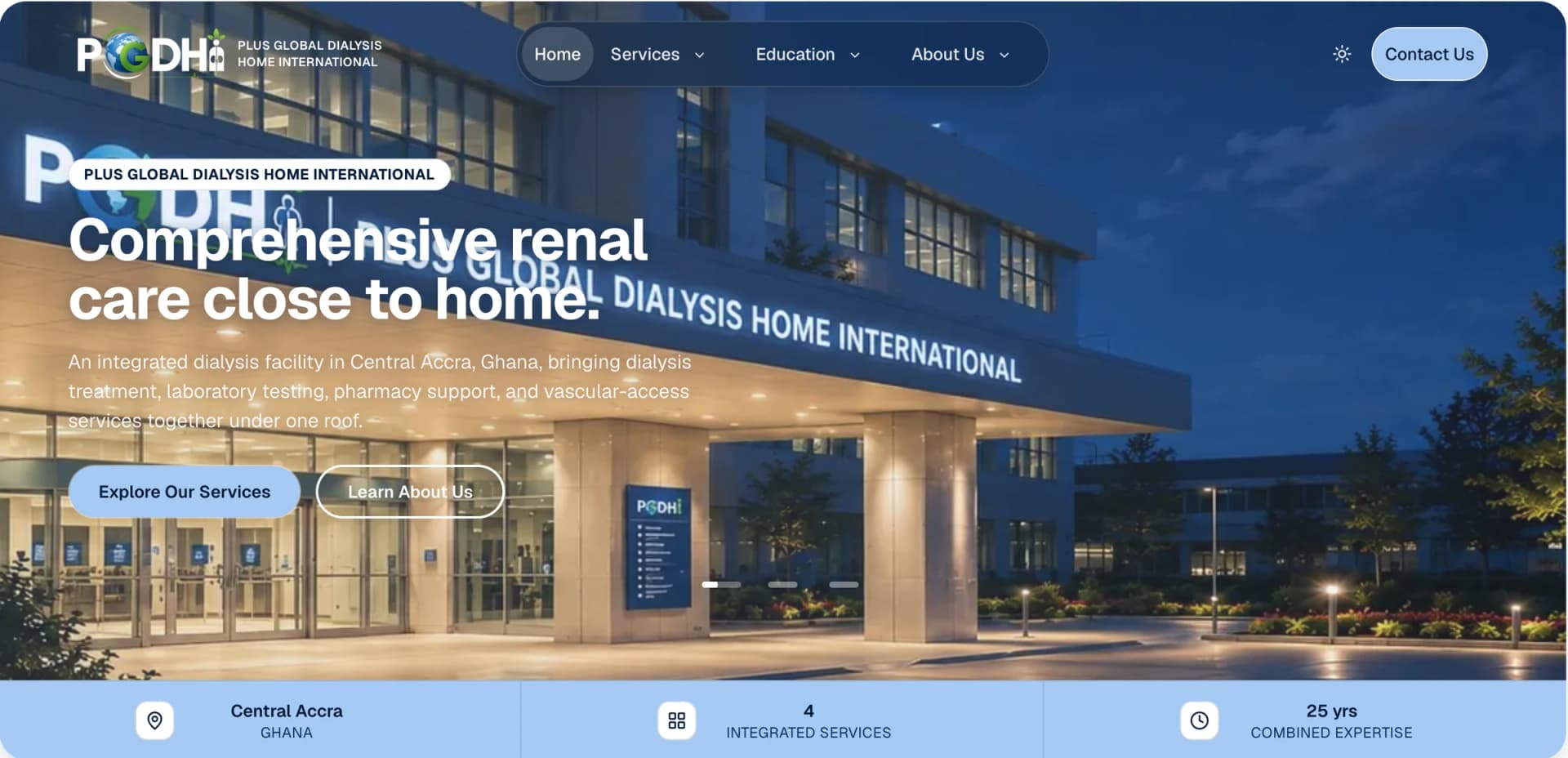
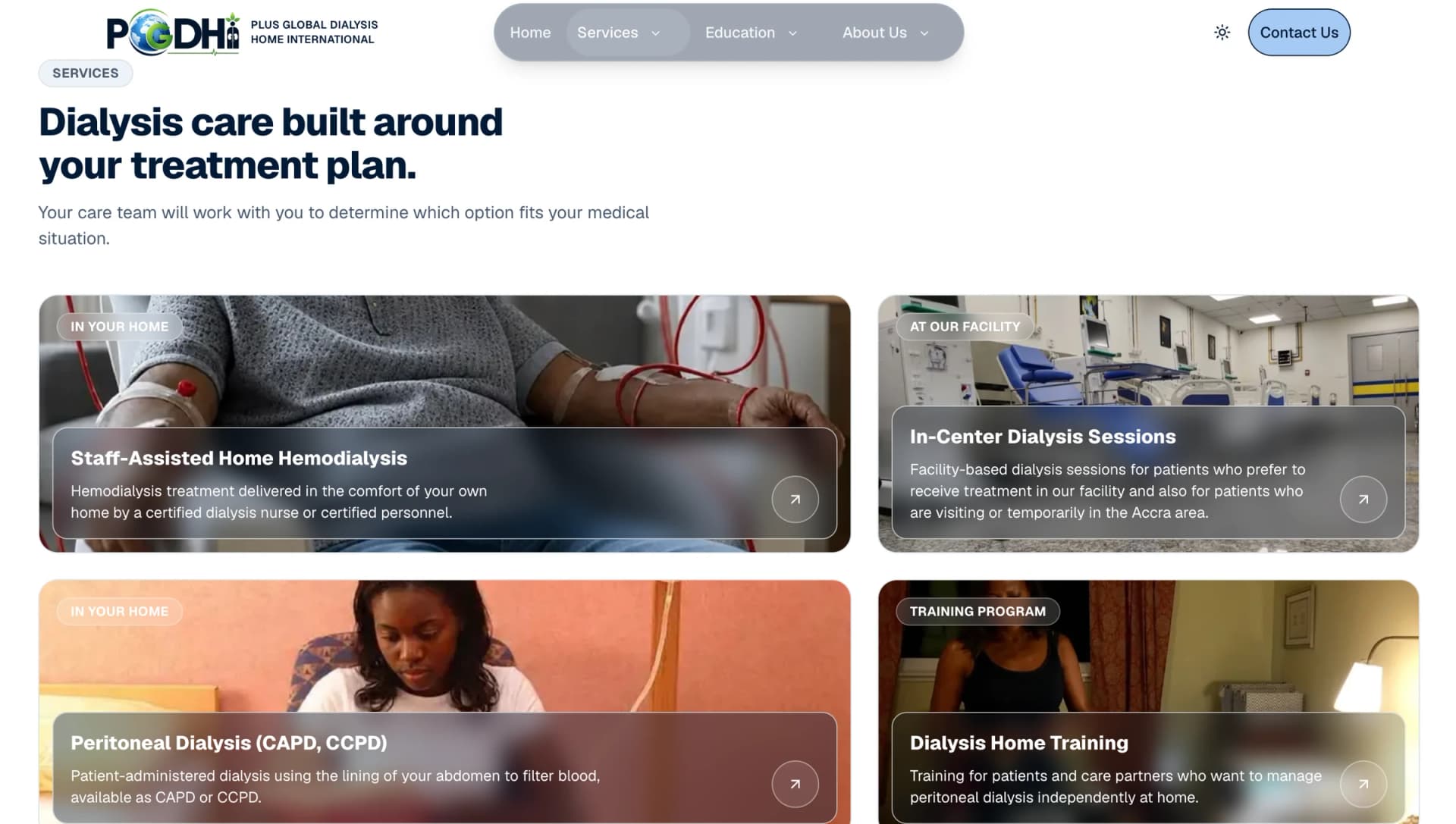
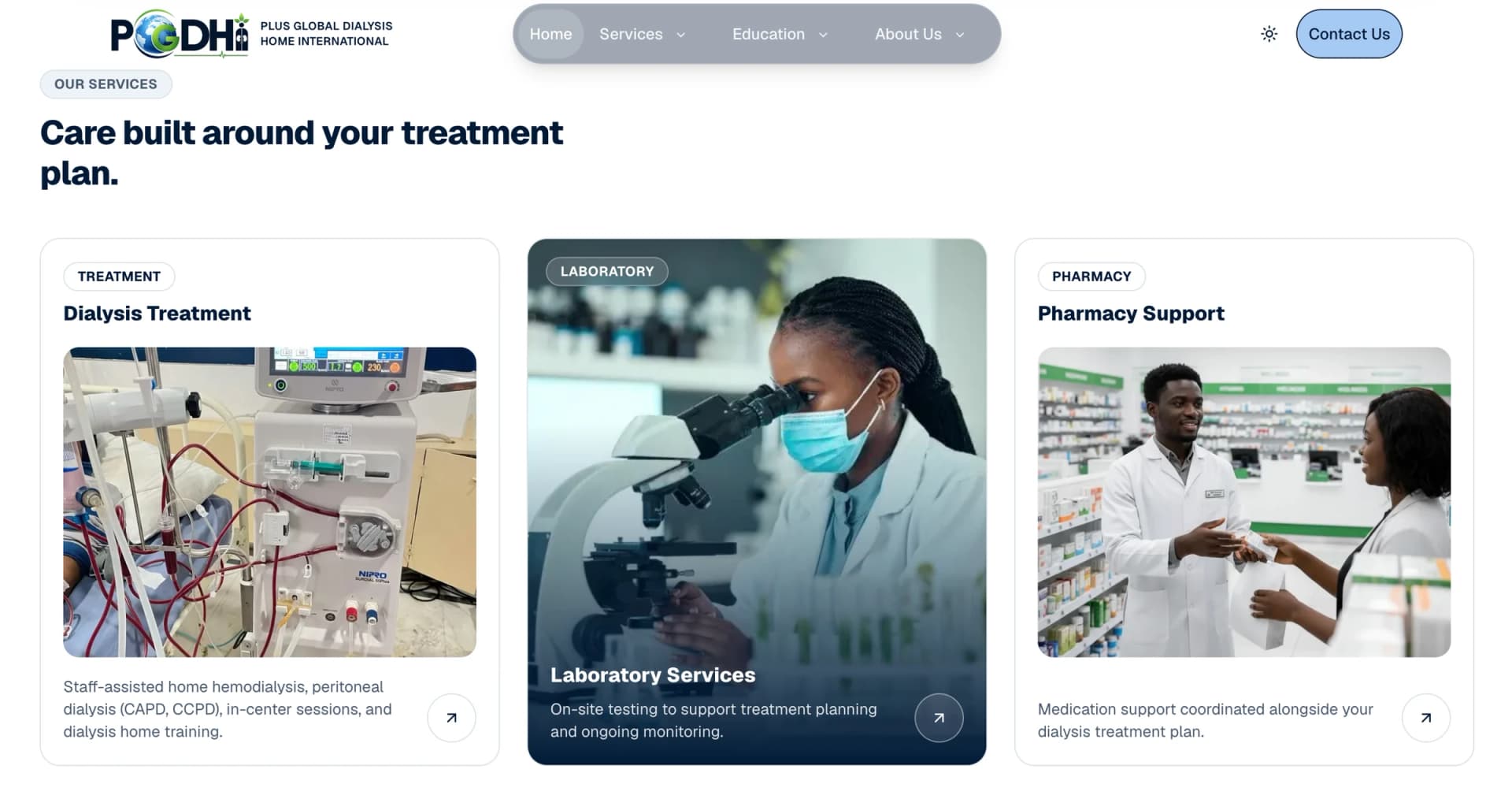
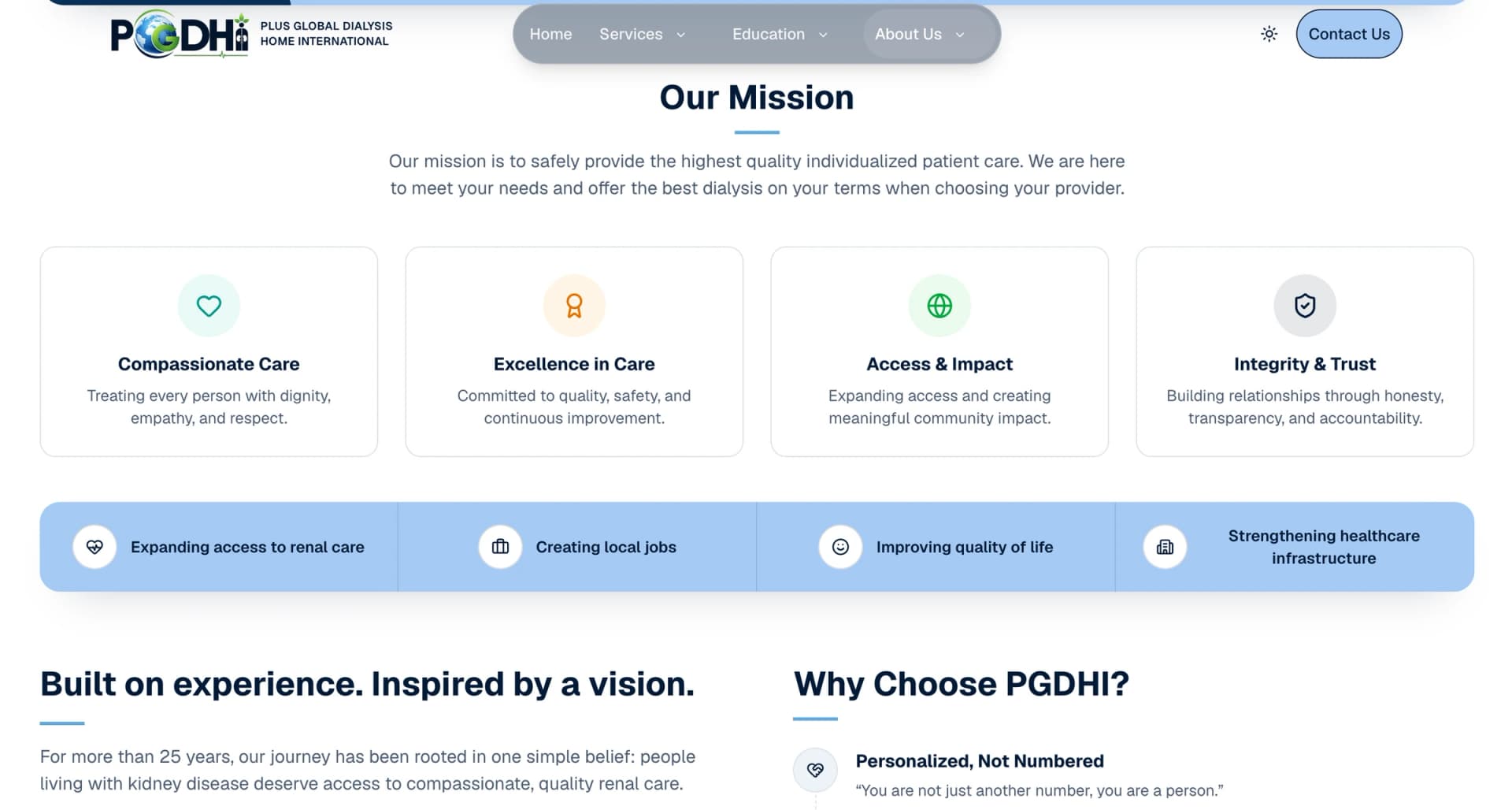
Real screenshot
01 — What it was
A full-stack website for Plus Global Dialysis Home International, a dialysis provider. Patients can register for intake and book appointments online.
02 — Why it mattered
Intake and booking involve patient data, so they have to be secure. Medical users also need layouts that work with assistive technology, so accessibility was a requirement.
03 — My role
Sole engineer. I ran the whole lifecycle through a multi-agent pipeline I set up on Claude Code: PM, UI/UX, Dev, Code Reviewer, QA and Code Improvement agents.
04 — Technical problems
Handling patient intake securely. Connecting the scheduler to a serverless Python backend and a Supabase database. Keeping every layout WCAG-compliant as features changed.
05 — What I did
Designed the six-agent pipeline and used it to plan, build, review and test the site. Built the intake registration and appointment scheduler. Covered user journeys with Playwright and components with Vitest and React Testing Library. Added automated axe-core audits to the pipeline.
06 — Tools
Next.js, React, TypeScript, JavaScript, HTML5, CSS3, Tailwind CSS; a serverless Python backend with REST APIs; Supabase; Claude Code; Playwright, Vitest, React Testing Library, axe-core.
- Next.js
- TypeScript
- Supabase
- Python
- Playwright
- axe-core
- Claude Code
- React
- Tailwind CSS
- Vitest
- RTL
- REST API
07 — Result
Live in production as a working medical platform for patient intake and appointment booking.
08 — What I learned
The agents made building fast, but the checks between them (Playwright journeys, component tests and axe-core audits) are what let me trust each change before it shipped. Speed only helped because the gates were there.